


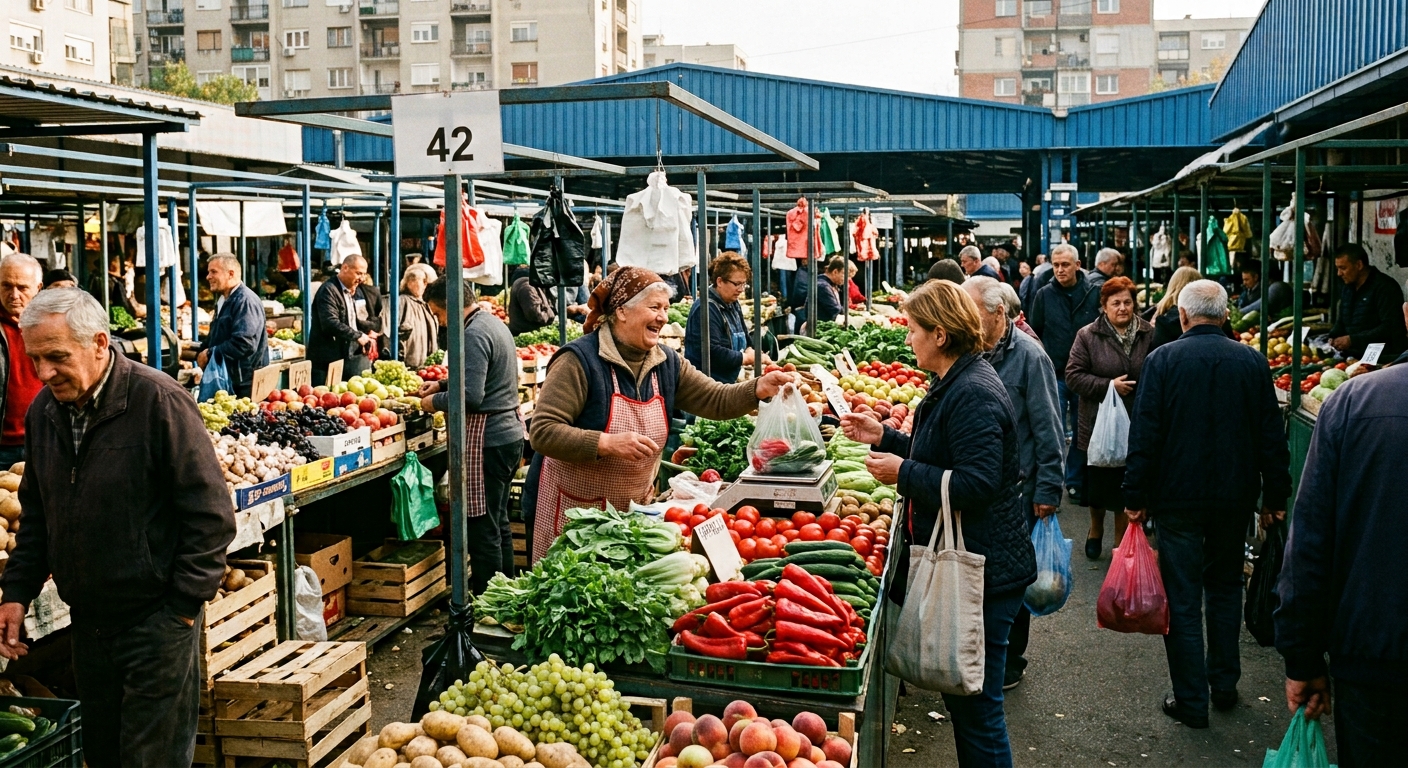
THE MARKET: THEN AND NOW
Nowadays, pressed for time, people don’t visit farmers’ markets as often as they used to. The price gap between fruit and vegetables at local markets and supermarkets isn’t as wide as it once was, neither option offers a 100% quality guarantee, and operating hours—along with exposure to unpredictable weather—certainly don’t work in favor of outdoor vendors.
BELGRADE MARKETS ON WEEKENDS
Even so, that bustling crowd, the lively chatter, and the lighthearted banter hanging in the air on a weekend morning are things we recommend every single student experience firsthand. We suggest waking up a bit earlier during the summer or autumn season and allowing yourself to soak up the atmosphere of this cultural phenomenon. This naturally includes the mandatory bargaining, complaining, and offering unsolicited advice—traits our local mindset proudly displays in every aspect of life.
MARKET CHAT – AUTHENTIC DIALOGUES IN UNFILTERED SERBIAN
DIALOGUE 1: FRUIT 🍎
Mušterija: Dobar dan! — Good day!
Prodavac: Dobar dan. Izvolite! — Good day. How can I help you?
Mušterija: Vidim da imate baš lepo voće. Odakle je? — I see you have really lovely fruit. Where is it from?
Prodavac: Mi smo iz Smedereva, okoline. Imamo tamo naše voćnjake još od mog dede. — We’re from the Smederevo area. We’ve had our family orchards there since my grandfather’s time.
Mušterija: Divno. Koliko su breskve, a koliko su nektarine? — Wonderful. How much are the peaches, and how much are the nectarines?
Prodavac: Breskve su 250 dinara, a nektarine 300 dinara kilo. — Peaches are 250 dinars, and nectarines are 300 dinars a kilo.
Mušterija: Dobro. A koliko su jabuke? — Alright. And how much are the apples?
Prodavac: Greni smit su 120, a ajdare su 150 dinara kilogram. — Granny Smiths are 120, and Idareds are 150 dinars a kilo.
Mušterija: Dobro, jabuke su u redu, ali što su nektarine tako skupe? — Okay, the apples are reasonable, but why are nectarines so expensive?
Prodavac: Sve je skupo, gospodine. Prskanje, orezivanje, branje… — Everything is expensive, sir. Spraying, pruning, picking…
Mušterija: Znam, ali naše plate su iste. — I know, but our salaries haven’t gone up.
Prodavac: Verujem vam. Ni moja zarada nije porasla, a troškovi samo rastu. — I hear you. My earnings haven’t grown either, but costs just keep rising.
Mušterija: Jeste. Dajte mi pola kilograma nektarina i kilo zelenih jabuka. — True enough. Give me half a kilo of nectarines and a kilo of green apples.
Prodavac: Odmah. Evo, 4 nektarine su 600 g, može? — Right away. Here, 4 nectarines come out to 600 grams—is that okay?
Mušterija: Može. — That’s fine.
Prodavac: 5 jabuka je 900 grama, može? — 5 apples are 900 grams—is that fine?
Mušterija: Može, hvala. — Yes, thank you.
Prodavac: To vam je 300 dinara. — That’ll be 300 dinars.
Mušterija: Izvolite. — Here you go.
Prodavac: Hvala. Prijatno. — Thank you. Have a nice day!
Mušterija: Vidimo se, prijatno i vama! — See you, have a good one too!
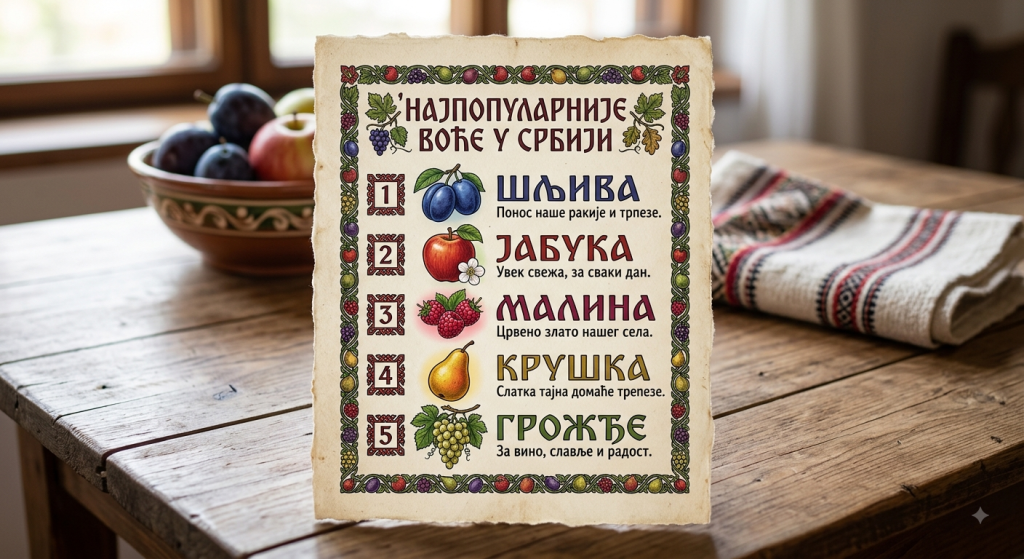
DIJALOG 2: POVRĆE / DIALOGUE 2: VEGETABLES 🍅
Prodavac: Dobro jutro, izvolite! — Good morning, how can I help you?
Mušterija: Dobro jutro. Koliko je kilogram roze paradajza? — Good morning. How much is a kilo of pink tomatoes?
Prodavac: Znate, on je malo skuplji, košta 250 dinara kilo. — You know, those are a bit pricier—they’re 250 dinars a kilo.
Mušterija: A je l’ može 2 kila za 400? — Can I get 2 kilos for 400?
Prodavac: Može 5 kila za 1000 dinara, i to je sve što mogu da vam učinim. — I can do 5 kilos for 1,000 dinars, and that’s the best I can do for you.
Mušterija: Ne treba mi toliko. A koliko je crvena paprika? — I don’t need that much. How much are the red peppers?
Prodavac: 300 dinara kilo. — 300 dinars a kilo.
Mušterija: A koliko je babura? — And the bell peppers?
Prodavac: Babura je isto 300 dinara kilo. — Bell peppers are also 300 dinars a kilo.
Mušterija: Dobro. Šta da se radi. Dajte mi kilo paprike i kilo paradajza. — Alright then, what can you do. Give me a kilo of peppers and a kilo of tomatoes.
Prodavac: A šta se sprema, gospođo? — And what are we cooking today, ma’am?
Mušterija: Dolaze mi deca, a ona vole sataraš. — My kids are coming over, and they love sataraš.
Prodavac: O, i ja volim sataraš. To je 550 dinara za ceo ručak. Pa gde to ima? — Ah, I love sataraš too! That’s 550 dinars for a whole lunch—where else can you get that?
Mušterija: Nije baš tako, moram i meso da kupim, ali hvala! — Well, it’s not quite that cheap, I still have to buy meat—but thanks!
Prodavac: Šalim se malo. Prijatno i uživajte! — Just pulling your leg! Enjoy your meal and have a great day!
Mušterija: Takođe! Vidimo se! — Likewise! See you!
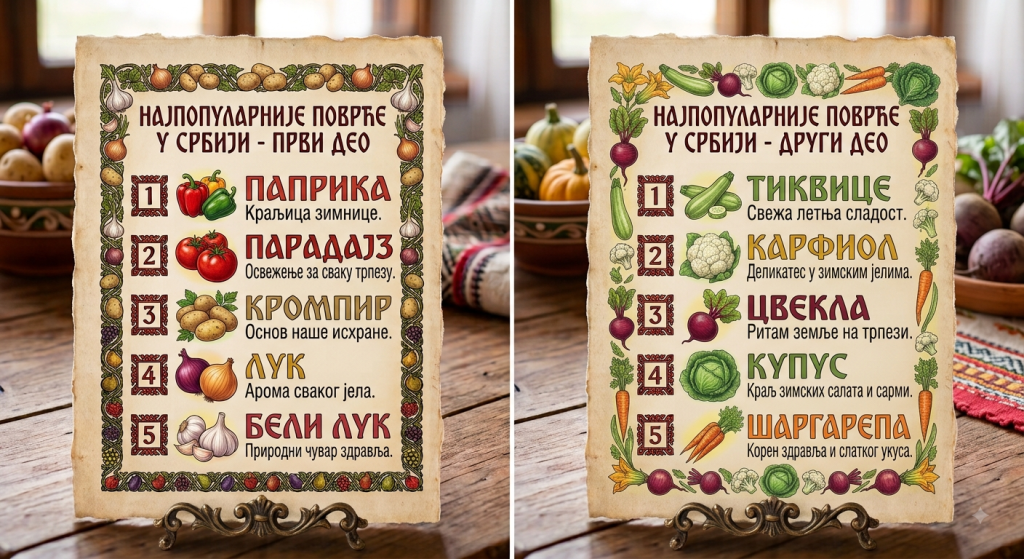
🎁 MALI POKLON: VEŽBANJE GENITIVA NA PIJACI / BONUS: GENITIVE PRACTICE
Pravilo uvek zapamtite / Always remember the rule:
Iza reči za količinu (kilo, pola kilograma, 100 grama, malo, puno) i iza brojeva 5, 6, 7… koristimo Genitiv!
(After quantity words and numbers 5+, we use the Genitive case!)
Vežba / Exercise: Dopunite praznine tačnim oblikom u genitivu
- Dajte mi pola kilograma __________ (nektarine) i 2 glavice __________ (beli luk ).
- Treba mi jedan kilogram roze __________ (paradajz) i kilo __________ (crvena paprika).
- Kupila sam dve veze __________ (mladi luk) i tri kila __________ (krompir).
- Prodavac ima puno svežih __________ (zelene jabuke) na tezgi.
- Molim vas pola kilograma __________ (jagode) i kilogram __________ (grožđe).
- Izvinite, gde mogu da nabavim malo _______________ (plavi patlidžan)?
- Koliko košta kilo _________ (trešnje)?
- Da li imate 10 kilograma __________ (crvena babura)?
- Da li prodajete malo _____________ (mladi sir)?
- Da li kod vas mogu da kupim 2 kilograma ________________ (domaći paradajz)?
Want to practice this scenario live with a native tutor? Book your 1-on-1 session here.



0 Comments